10 Years of the Medical Informatics Initiative: Millions of Clinical Data Records for Research and Healthcare
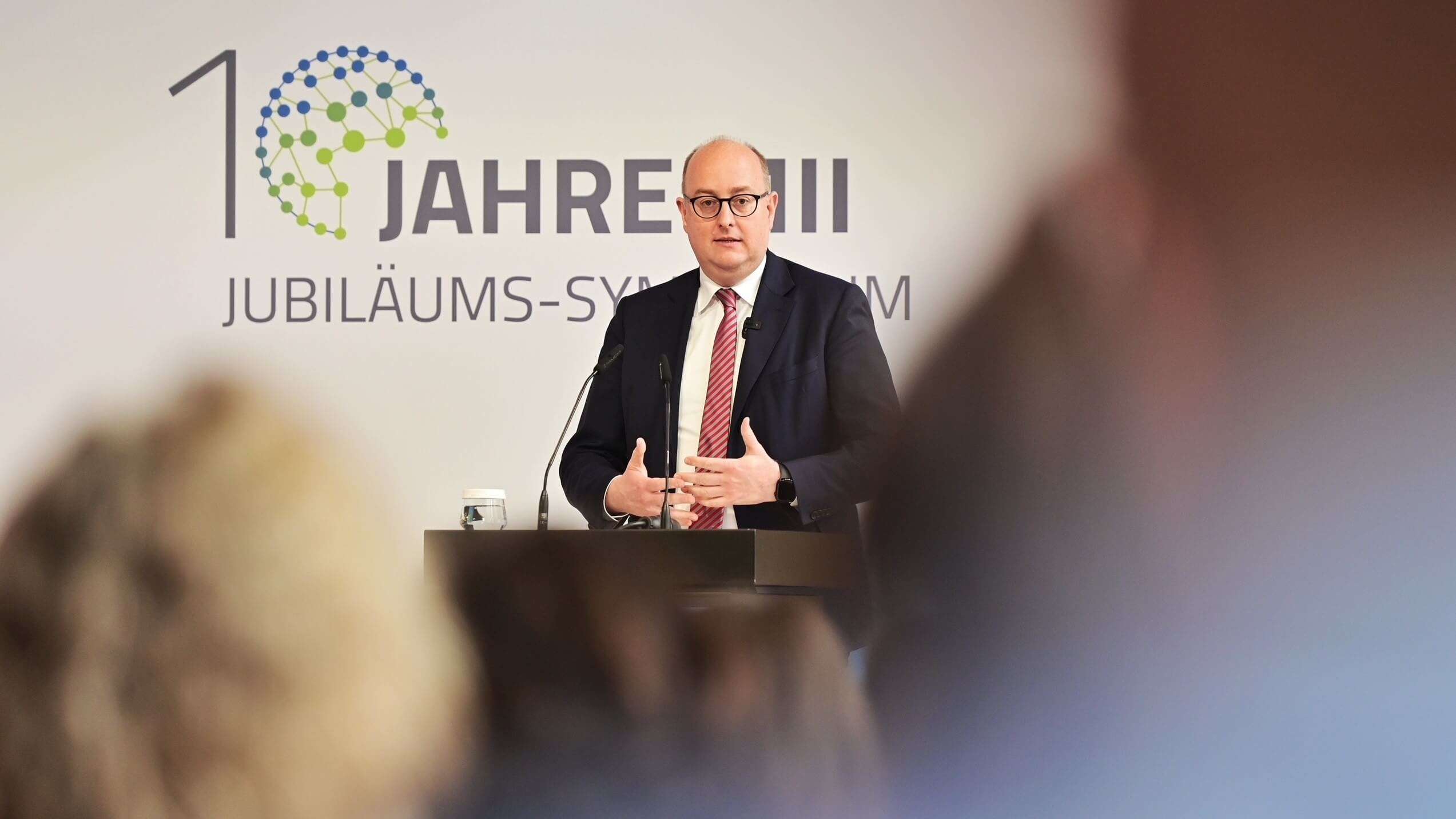
Matthias Hauer, Parliamentary State Secretary at the Federal Ministry of Research, Technology and Space, opened the MII Symposium. © TMF e. V.
The Medical Informatics Initiative (MII) is demonstrating how digital health data can transform research and healthcare. The MII Symposium 2026 highlights that Germany now has a powerful infrastructure in place that enables large-scale use of clinical data for research, laying the foundation for a new era of data-driven medicine. At the anniversary symposium on March 24 and 25, 2026, key stakeholders in digital health research came together to take stock of progress and discuss perspectives for the years ahead.
“Data are the raw material of the future,” emphasized Matthias Hauer, Parliamentary State Secretary at the Federal Ministry of Research, Technology and Space, in his opening address at the MII Symposium. “The MII has demonstrated what can be achieved when science, healthcare and policymakers jointly embrace the digital transformation.” He highlighted the MII’s achievements over the past ten years, during which it has transformed a fragmented data landscape into an interconnected infrastructure based on common standards.
The MII has demonstrated what can be achieved when science, healthcare and policymakers jointly embrace the digital transformation.
German Research Data Portal for Health Provides Large-Scale Access to Real-World Data
Building on this infrastructure, researchers can access an unprecedented volume of data through the German Research Data Portal for Health (FDPG): more than two billion laboratory results, basic data on over 21 million patients from all university hospitals, and more than 200 million vital signs from intensive care are available for scientific research.
“The Medical Informatics Initiative impressively demonstrates how harmonized data and intelligent algorithms can advance our understanding of diseases. Through the MII, we have established a powerful data infrastructure that links medical datasets from university hospitals and makes them available for research,” says Sebastian C. Semler, Head of the MII Coordination Office.
A key foundation for this development is the establishment of Data Integration Centers (DICs) at all university hospitals across Germany. These centers prepare clinical care and research data in compliance with data protection regulations and make them available for research across institutional boundaries. The FDPG consolidates these datasets, enables feasibility inquiries and provides standardized application procedures.
Real-World Data Enable New Data Analyses
Numerous research projects presented at the symposium demonstrate what can be achieved with these real-world data. From analyzing complex disease trajectories and optimizing treatments to developing new approaches in precision medicine, data-driven analyses are already helping to improve patient care.
Prof. Dr. Irit Nachtigall of Vivantes GmbH highlighted sex-specific differences in the diagnosis, treatment and progression of sepsis. “Sepsis is often diagnosed and treated later in women,” Nachtigall noted. MII data provide the basis for systematically identifying such differences and, in the future, enabling more targeted, sex-specific approaches to sepsis diagnosis and treatment.
Dr. Jakob Zierk from University Hospital Erlangen explained that reliable data foundations for pediatric reference intervals have so far been lacking. The PEDREF 2.0 study, conducted across Germany, uses routine clinical data from the MII and modern data-mining methods to develop more precise reference intervals, thereby significantly improving laboratory diagnostic decision-making in pediatrics.
MII and the Network of University Medicine Join Forces
In the next phase of development, the MII and the Network of University Medicine (NUM) are coming together to form a powerful research infrastructure. This will create the conditions for greater innovation, enhanced competitiveness and increased value creation through key technologies such as artificial intelligence.
“Harmonized data and smart algorithms are the driving force behind the medicine of the future. The Medical Informatics Initiative is laying the foundations for making health data utilization fit for the age of artificial intelligence and sustainably strengthening Germany’s competitiveness. University medicine plays a key role in this process by contributing its expertise in both research and healthcare,” emphasized Jens Bussmann of the German Association of Academic Medical Centers (VUD).
The keynote address by Prof. Dr. Björn Eskofier of Ludwig Maximilian University of Munich (LMU) also highlighted the transformative impact data will have on medicine: “Health data are becoming the foundation of modern, precise and personalized medicine. Artificial intelligence will increasingly support physicians in diagnosis and treatment. However, realizing this potential requires sustainable data infrastructures and clear science policy strategies. The Medical Informatics Initiative and the European Health Data Space are helping to establish important foundations for this transformation in Germany and across Europe.”
Health data are becoming the foundation of modern, precise and personalized medicine.
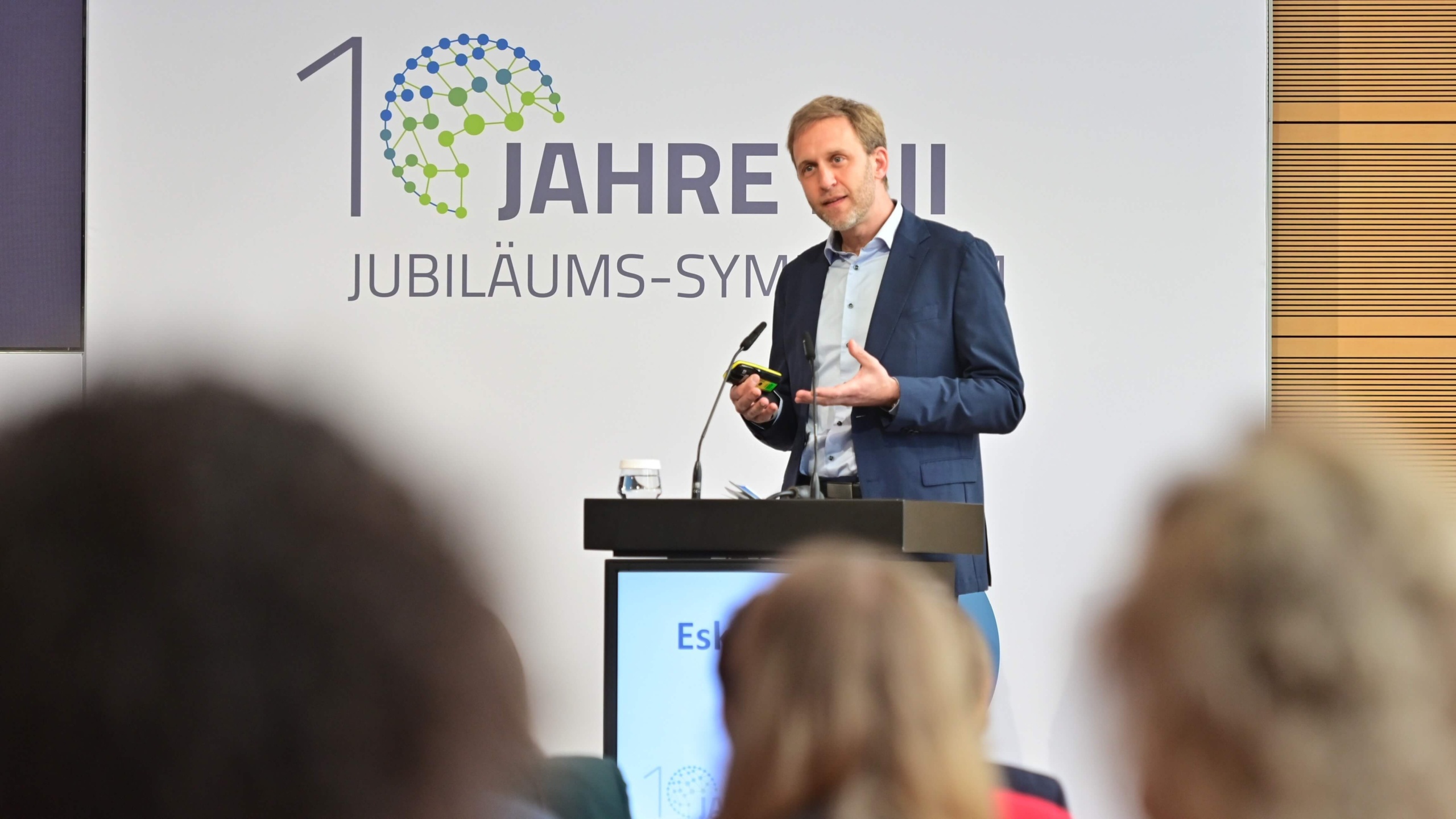
Prof. Dr. Björn Eskofier from Ludwig Maximilian University of Munich delivered a keynote entitled “AI for the Healthcare of the Future – How Data Becomes Medicine.” © TMF e. V.
Digital Progress Hubs Unlock Data Across Sectors
In a next step, the MII is to be expanded beyond university medical centers to include the wider healthcare system, across different sectors. In her keynote, Dr. Johanna Ludwig from gematik stated: “Only when data from everyday clinical practice are available in a structured format can we truly understand and improve healthcare delivery.” The Digital Hubs (DigiHubs) have set themselves this goal and presented their concepts at the 1st DigiHubs Symposium, held as part of the MII Symposium. “The DigiHubs embed innovative digital solutions developed in university medicine into regional healthcare delivery and build on the results of the MII,” explained Semler. By 2029, the aim is to make healthcare data from across different sectors accessible for research.
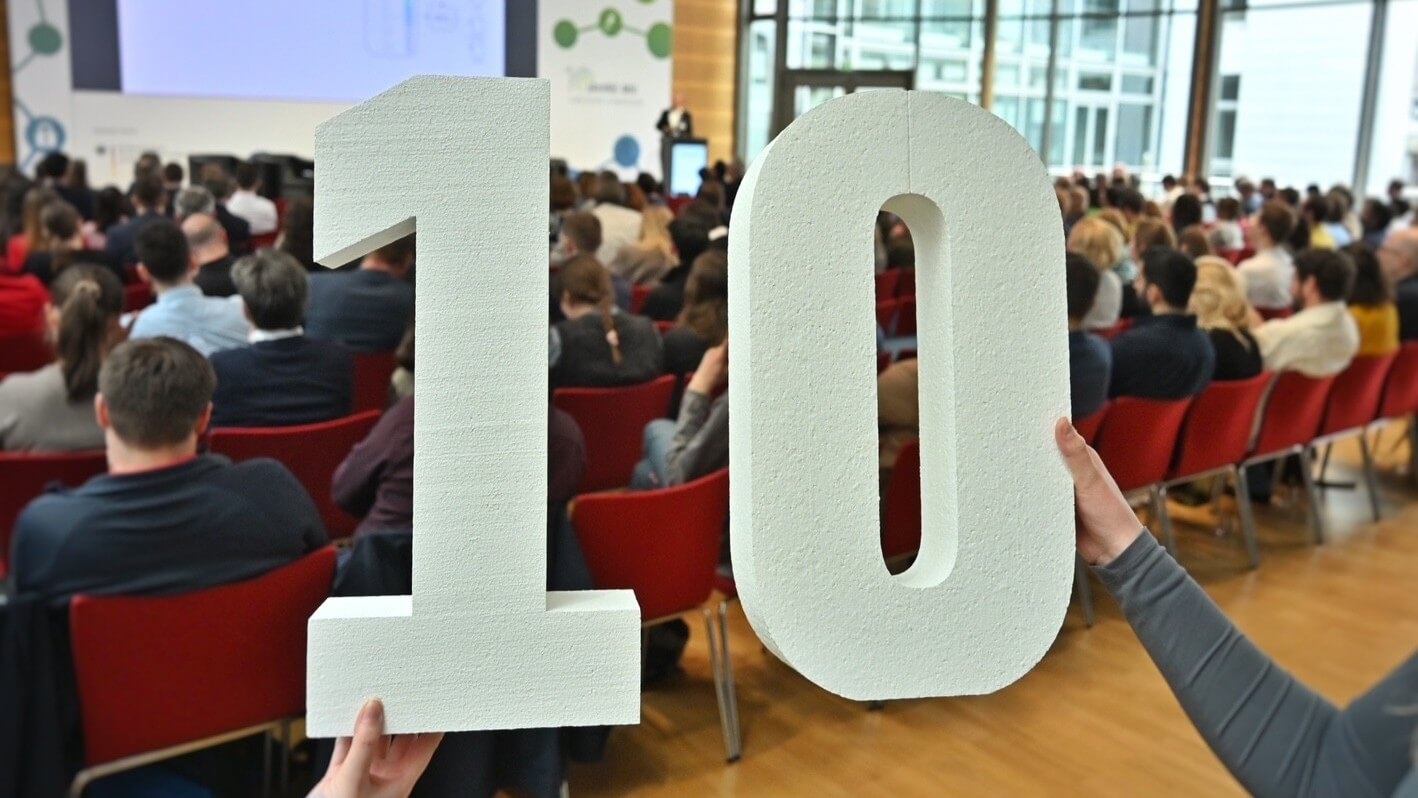
The Medical Informatics Initiative celebrates its tenth anniversary. © TMF e. V.
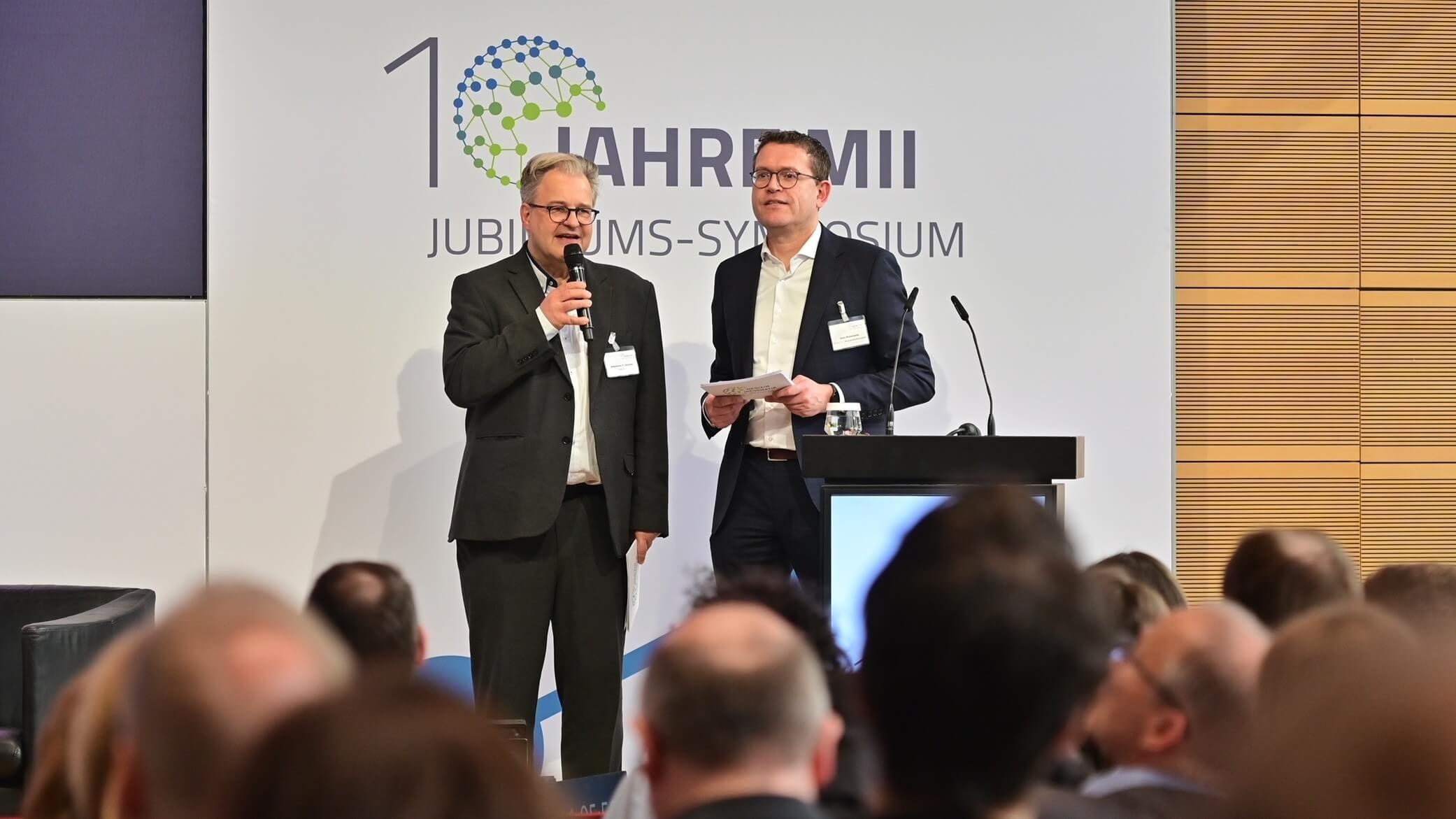
From left to right: Sebastian C. Semler, Executive Director of TMF and Head of the MII Coordination Office, and Jens Bussmann, German Association of Academic Medical Centers. © TMF e. V.

© TMF e. V.
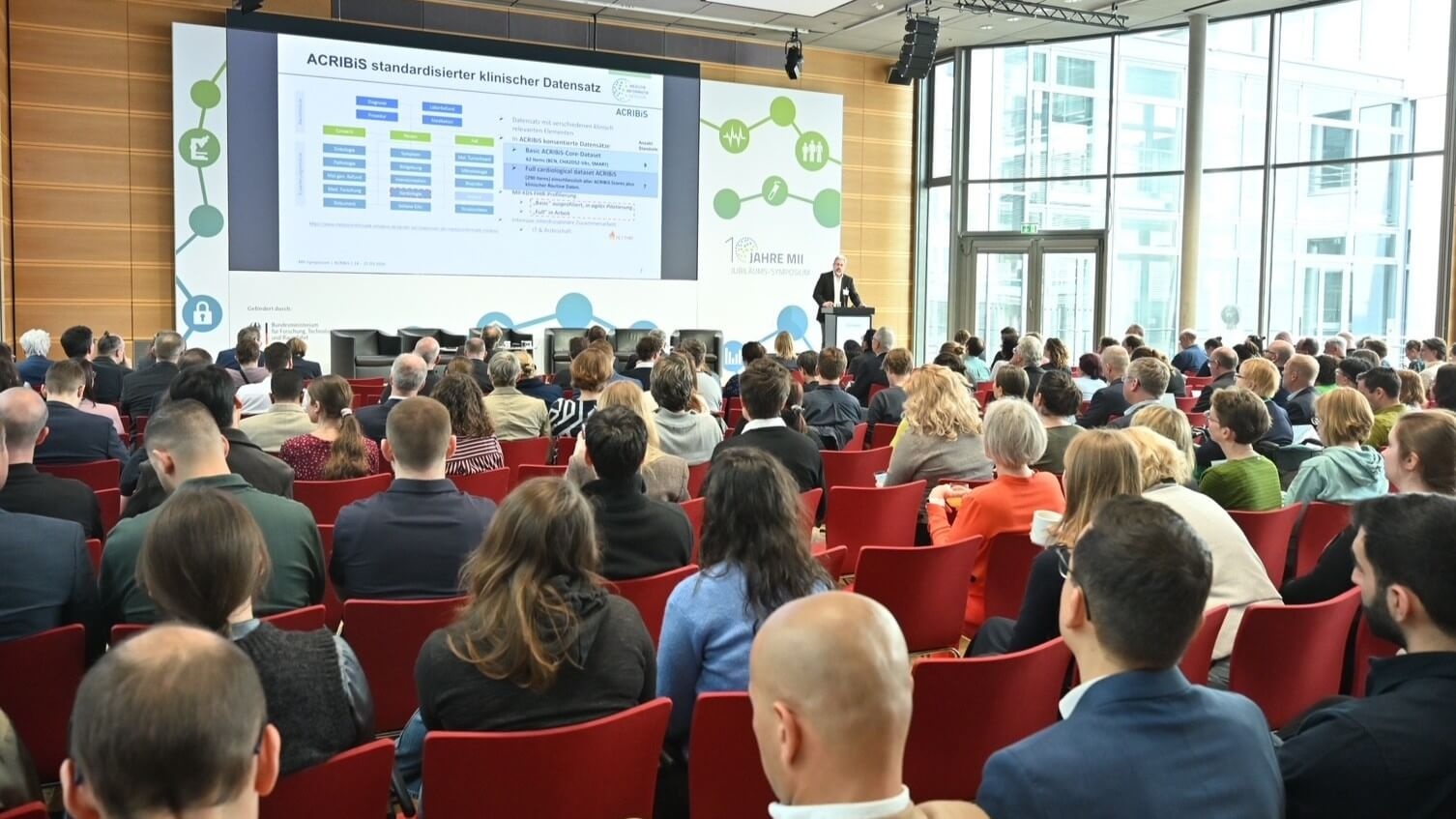
Key stakeholders in digital health research gathered at the MII Anniversary Symposium. © TMF e. V.
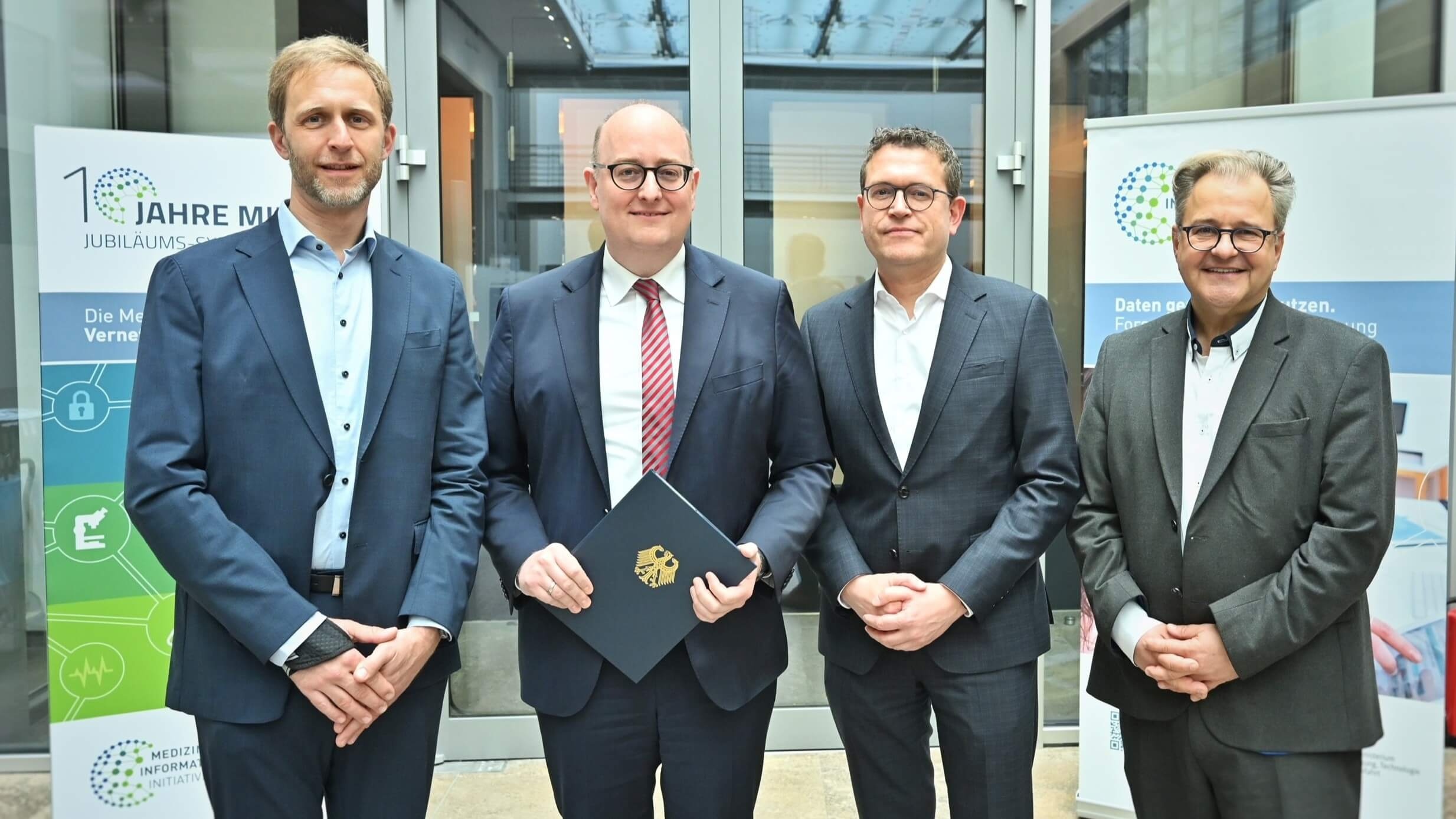
From left to right: Prof. Dr. Björn Eskofier (Ludwig Maximilian University of Munich), Matthias Hauer (Federal Ministry of Research, Technology and Space), Jens Bussmann (German Association of Academic Medical Centers), and Sebastian C. Semler (TMF e. V. and MII Coordination Office). © TMF e. V.
© TMF e. V.
Press Contact
Wiebke Lesch
Phone: 030 − 22 00 24 731
Mobile: 0177 2663257
Email: presse@medizininformatik-initiative.de
About the Medical Informatics Initiative (MII)
The MII is a nationwide innovation project that makes healthcare data available for use in research and to improve patient care. University hospitals, research institutions and partners from clinical practice work closely together to drive digital transformation in medicine. The MII is coordinated by TMF e. V., together with the German Association of Academic Medical Centers (VUD) and the German Medical Faculty Association (MFT). The German Federal Ministry of Research, Technology and Space (BMFTR) is providing funding for the MII through the end of 2026, amounting to more than €480 million in total.
Since 2018, the MII has been establishing data infrastructures at university hospitals. Through a wide range of use cases – from intensive care to oncology – MII partners have already demonstrated the practical value of their IT solutions. The focus of the expansion and further development phase (2023–2026) is on strengthening collaboration between university hospitals and extending their cooperation to new partners, particularly those involved in regional healthcare delivery.
A key component of this infrastructure is the German Research Data Portal for Health (FDPG). It is intended to serve as a central point of access for all researchers seeking to use data and biospecimens from university medicine.
Further Information