The 16th TMF Annual Meeting 2025: Setting the Course for Genomic Medicine
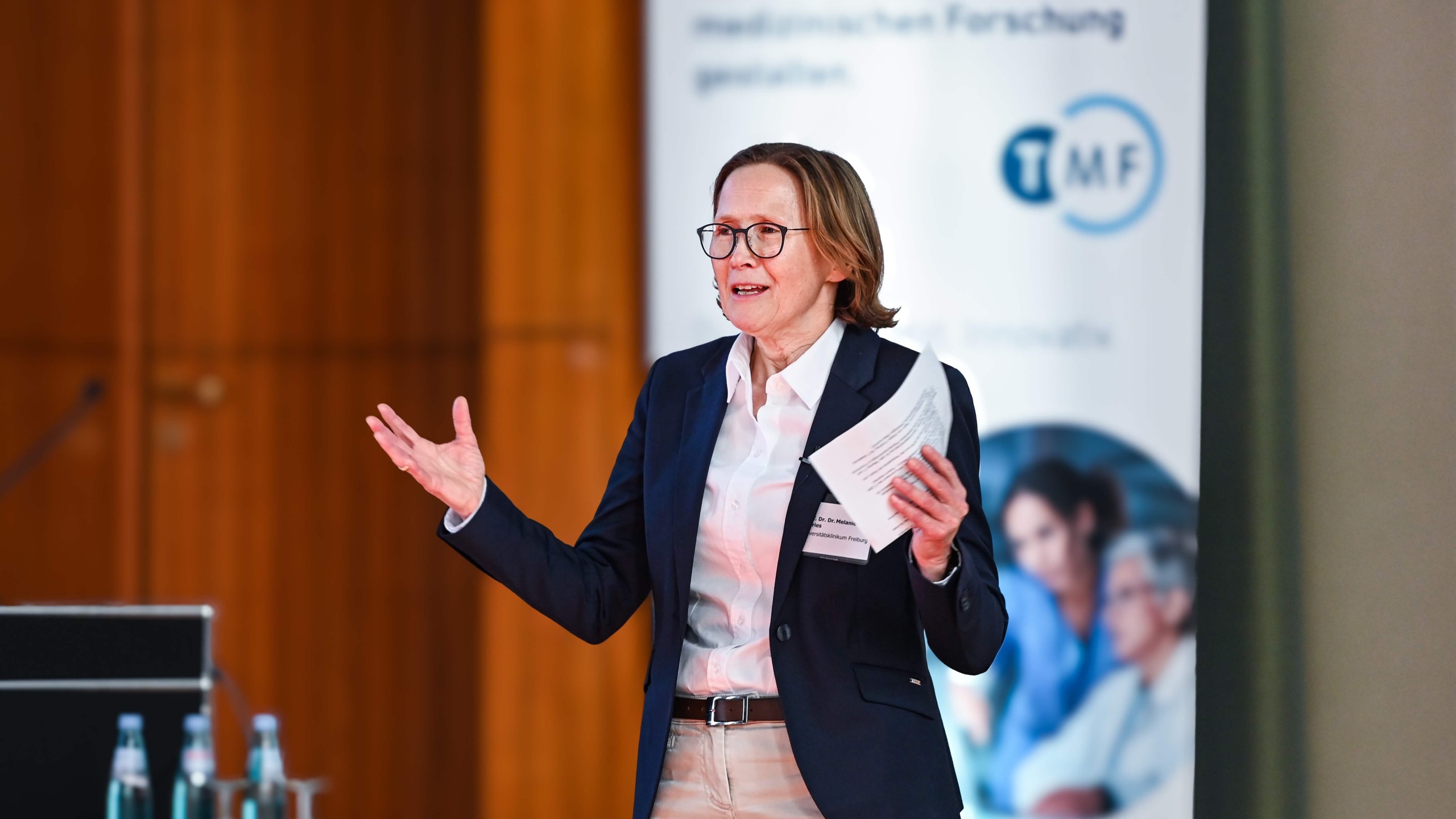
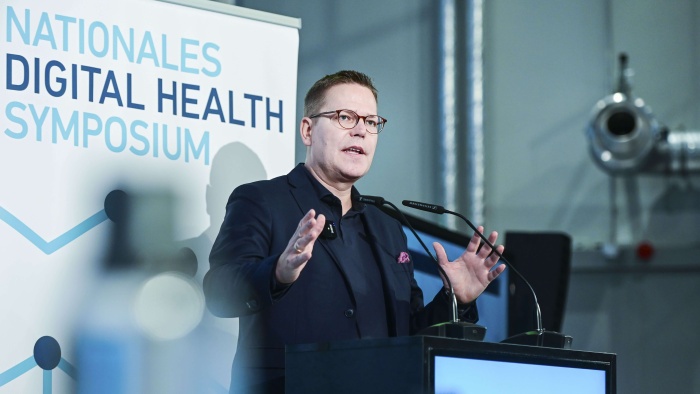
Conference Chair Prof. Dr. Dr. Melanie Börries from the University Hospital Freiburg opened the TMF’s Annual Meeting 2025. © TMF
The 16th TMF Annual Meeting, held from April 2-3, 2025, focused on the future of genomic medicine. Conference Chair Prof. Dr. Dr. Melanie Börries from the University Hospital Freiburg emphasized that genomic medicine can only reach its full potential if “data are intelligently linked, securely shared, and standardized for analysis. For this, we need powerful infrastructures, suitable regulatory frameworks, and interdisciplinary collaboration.” The TMF’s Annual Meeting brings together experts from science, politics, and industry every year to discuss solutions for connected digital research.
From Vision to Implementation: Frameworks and Digital Ecosystems in Focus
The focus of the annual meeting was on the necessary frameworks and infrastructures that should pave the way for genomic personalized medicine in Germany. A high-profile lineup of speakers provided exciting insights into ongoing projects, regulatory developments, and technological innovations in medicine.
In her keynote, Prof. Dr. Lena Illert from the Technical University of Munich demonstrated how genomic medicine is already changing cancer research and treatment today—and what prerequisites must be established to ensure these approaches reach their full potential in practice for patients. "Molecular tumor boards are a crucial component of modern cancer medicine. They enable precise, interdisciplinary treatment decisions based on molecular tumor profiles. It is essential that we integrate functional methods and longitudinal data analysis to better understand dynamic disease progressions and continuously adjust treatment strategies," said Illert.

In her keynote, Prof. Dr. Lena Illert from the Technical University of Munich highlighted how genomic medicine is already changing cancer research and treatment today. © TMF
Molecular tumor boards are a key building block of modern cancer medicine.

PD Dr. Andreas Till, Federal Institute for Drugs and Medical Devices (BfArM). © TMF
Shared Mission: Making Data Usable for Research and Healthcare
However, an initial framework for genomic medicine is needed as a foundation for its implementation. Experts emphasized that binding legal, ethical, and technical frameworks are required to securely and standardizedly use genomic data in patient care. The model project for genomic sequencing, presented by PD Dr. Andreas Till from the Federal Institute for Drugs and Medical Devices (BfArM), provides a first blueprint for the responsible use of genomic data in the healthcare system. The project centers around a platform that makes genomic and clinical data of patients with oncological and rare diseases available for care and research. "In the next five years, we plan to include 100,000 patients," said Till. Soon, it will also connect to the European Health Data Space (EHDS) and integrate with national cancer registries.
European Health Data Space (EHDS): A European Data Infrastructure Enabling Innovations
At the end of the first day of the annual meeting, the European Health Data Space (EHDS) was discussed. The EHDS aims to drive cross-border exchange of health data across Europe. The regulatory and technical requirements necessary to enable the safe and efficient use of genomic and clinical data were debated. The EHDS offers great opportunities for research and care, but also imposes high demands on data protection and interoperability. The goal is to create a European data infrastructure that fosters innovation without neglecting ethical and legal concerns.
Dr. Heiko Waldmüller and Lukas Wrosch from gematik GmbH presented plans for cross-border care and the secondary use of data within the EHDS. As part of the EU preparatory projects Xt-EHR and TEHDAS2, standards, guidelines, and technical specifications for data holders, data users, and health data access points are being developed. The Federal Ministry of Health, as the responsible authority for Germany, has involved the TMF, BfArM, and gematik in the project. "There are still several challenges to overcome to set up the EHDS," emphasized Sebastian C. Semler from the TMF. "These include infrastructure for Germany's EHDS connection architecture, the implementation of the opt-out system, and its interaction with national legislation." Waldmüller and Wrosch urged participation in the ongoing stakeholder dialogue and contribution to the design.
“The exchange between researchers, authorities, and patients at the TMF’s Annual Meeting lays the foundation for creating a research and innovation infrastructure to generate benefits for patients and healthcare providers through data,” summarized the TMF’s Chairman Prof. Dr. Rainer Röhrig.

Dr. Heiko Waldmüller, gematik GmbH. © TMF

Lukas Wrosch, gematik GmbH. © TMF

Sebastian C. Semler, Executive Director of the TMF. © TMF

Prof. Dr. Rainer Röhrig, Chairman of the TMF’s Board. © TMF
Press Contact
Wiebke Lesch
Phone: +49 30 2200 24731
Mobile: +49 177 2663257
E-mail: presse@tmf-ev.de
X: @tmf_eV
Image Credits
The photos are available for editorial reporting. Source: TMF /Volkmar Otto
Further Information
About the TMF
TMF – Technology and Methods Platform for Networked Medical Research e. V. stands for research, networking, and digitization in medicine. It is the umbrella organization for collaborative medical research in Germany, within which leading researchers exchange knowledge, develop ideas and concepts together, and thus shape the future of medical research in the digital age.