German Bundestag Hearing on the GeDIG: TMF Contributes the Perspective of Networked Medical Research

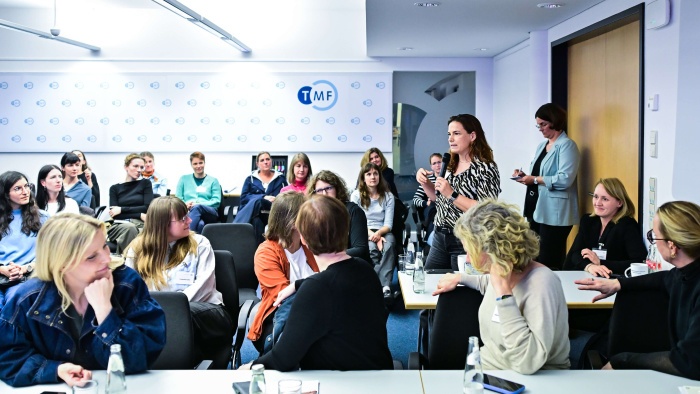
TMF Executive Director Sebastian C. Semler. © TMF e.V.
On 14 October 2026, a hearing on the Act on Data and Digital Innovation in Healthcare (GeDIG) took place in the German Bundestag. For TMF, the key question was how health data can deliver greater benefits for research, healthcare and patients. We attended the hearing in person and contributed the perspective of networked medical research to the discussions.
TMF welcomes the GeDIG’s aim of advancing the digitalisation of healthcare and strengthening the use of health data for research and innovation. However, new legal provisions must also work in practice. From TMF’s perspective, our focus is on the Health Data Use Act (Gesundheitsdatennutzungsgesetz, GDNG). Two aspects are particularly important:
Scientific concepts must be developed by the scientific community
Scientific concepts should be developed by researchers. This includes the concept for a research identifier and an opt-out register, as well as procedures for commissioning domain-specific Health Data Access Bodies, secure processing environments (SPEs) and data linkage. These are highly complex tasks.
We recommend commissioning scientific concepts for the following areas:
- Research identifier (§ 3)
- Opt-out register (§ 16)
- Procedures for commissioning dHDABs, SPEs and data linkage (§§ 11, 13, 22)
- Evaluation (§ 23)
Enable data use and unlock the value of data
To date, the GDNG has fallen short of its potential because §§ 5 and 24 lack a few crucial provisions for collaborative research projects involving multiple institutions. These additions would make procedures more practicable for projects involving several organisations and help prevent divergent decisions by the data protection supervisory authorities involved.
Enabling provisions are needed to unlock the value of data:
- Establish uniform and practicable procedures for data use in nationwide collaborative research projects (§ 24).
- Modernise data protection supervision (§ 5).
- Prevent divergent decisions by individual data protection supervisory authorities by clarifying responsibilities, introducing majority-based decision-making and ensuring binding decisions.
- Include residual samples (§ 24).
- Harmonise registration and transparency requirements (§ 28) and enable consent-based use of health insurance data without authorisation requirements (§ 287 SGB V / § 75 SGB X).
Our message: The GDNG must not be limited to implementing the European Health Data Space (EHDS). It must already be creating better conditions for medical research in Germany today.

© TMF e.V.

Dr Thomas Pauls, Member of the German Bundestag (CDU/CSU). © TMF e.V.

Matthias Mieves, Member of the German Bundestag (SPD). © TMF e.V.

TMF Executive Director Sebastian C. Semler. © TMF e.V.
Further Information