Rethinking Biobanking: Nationwide Biobank Platform Aims To Accelerate Research Using Biospecimens and Research Data

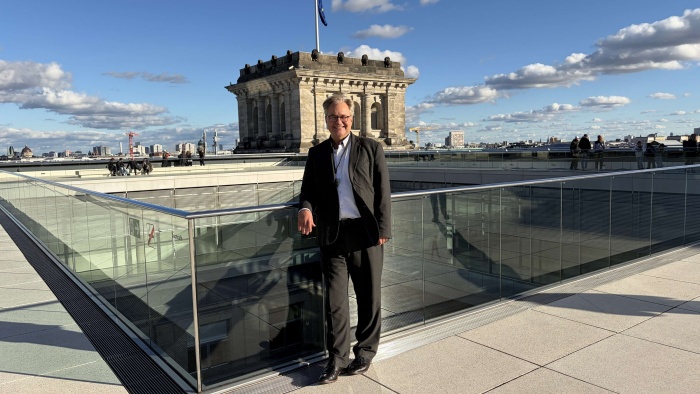
Dr Ronny Baber, Congress President of the 14th National Biobanking Symposium 2026 and Head of the Leipzig Medical Biobank. © TMF e.V./Volkmar Otto
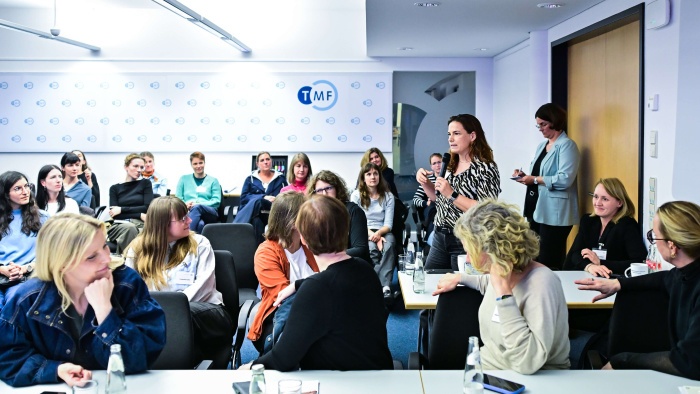
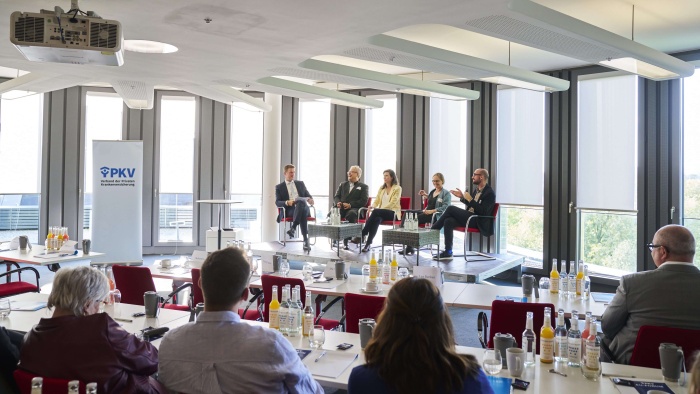
Berlin, 16 September 2026. Biobanks are evolving from traditional sample collections into key hubs for networked, data-driven medical research. How this transformation can be shaped was discussed by around 200 experts from biobanking, research, healthcare and industry at the 14th National Biobanking Symposium, held in Berlin on 15 and 16 September 2026. Under the motto “Rethinking Biobanking!”, the event focused on new research infrastructures, the integration of biospecimens and health data, and innovative technologies and quality standards.
“Biobanks are no longer merely collections of high-quality biological samples and associated data. They have become integral components of a networked, data-driven research landscape,” emphasises Dr Ronny Baber, Congress President of the 14th National Biobanking Symposium and Head of the Leipzig Medical Biobank. Integrating biomaterials with clinical, molecular and imaging data, applying artificial intelligence, and connecting national and European research infrastructures are opening up new opportunities for biomedical research and precision medicine. At the same time, requirements for quality, standardisation and sustainability, as well as ethical and legal frameworks, are becoming increasingly demanding.
Biobank Platform for Germany Aims To Accelerate Research
The new Biobank Platform for Germany played a central role at the symposium. A nationwide research infrastructure is being established within the Network of University Medicine (NUM) to simplify and standardise access to quality-assured biospecimens and their associated clinical and analytical data. It builds on the structures and experience of the German Biobank Network (GBN).
The platform is intended to do more than technically connect existing biobanks. Plans include joint governance and cooperation structures, harmonised quality standards and proficiency testing, a shared infrastructure for continuing education and training, and regional biobank hubs. These hubs are also intended to facilitate the involvement of hospitals, specialist medical practices, rehabilitation facilities and other healthcare partners outside university medicine in the collection of research samples. Routine samples from pathology and laboratory medicine, which have so far been used for research only to a limited extent, are also to be made available more systematically.
One key objective is to reduce the often lengthy process of searching for suitable samples and coordinating requests between different sites. Standardised access, quality and governance structures are intended to facilitate multicentre research projects and enable biobanking to be incorporated into the planning of clinical trials at an early stage.
“International biomedical research is increasingly moving towards large, interconnected research infrastructures with harmonised quality standards and interoperable data spaces. The new Biobank Platform aims to position Germany as a leader in this field,” explains PD Dr Dr Michael Kiehntopf, member of the TMF Board and the GBN Board.

PD Dr Dr Michael Kiehntopf, TMF Board and GBN Board. © TMF e.V./Volkmar Otto
The new Biobank Platform aims to position Germany as a leader in this field.
From Tumour Organoids to 3D Printing
Numerous presentations at the symposium demonstrated just how innovative modern biobanking already is. Researchers from University Medicine Rostock, for example, presented a biobank of patient-derived tumour organoids. These three-dimensional models preserve key characteristics of the original tumour and could help improve predictions of individual responses to cancer therapies in the future. In a proof-of-concept study involving head and neck tumours, combining the organoids with patients’ own immune cells showed potential for predicting responses to anti-PD-1 immunotherapy.
New solutions are also emerging in laboratories themselves. The tissue bank at the National Center for Tumour Diseases (NCT) Heidelberg, for example, uses 3D printing to manufacture its own laboratory components when standard products are unsuitable for specific biobanking processes. Custom components can thus be adapted quickly and integrated into existing equipment, while also reducing dependence on external suppliers.
Automation is playing an increasingly important role, too. Heidelberg University Hospital has established an automated storage infrastructure capable of storing around 2.5 million sample aliquots at −80°C and a further 210,000 at −196°C across an area of 378 square metres. Redundant cooling systems, emergency power supply and 24/7 monitoring are designed to safeguard sample quality and ensure operational reliability.
From Ancient Genomes to Precision Medicine
In his keynote address, “From Ancient Genomes to Precision Medicine”, Prof Dr Ben Krause-Kyora from Kiel University offered a fascinating perspective on the future of medicine. Drawing on DNA sequencing of ancient remains from bones and teeth, the archaeogeneticist demonstrated how evolution, environmental factors, infectious diseases, and changing lifestyles and diets have shaped our genetic make-up – and why this matters for diseases today. Combining historical biomaterials with modern biobanks opens up new opportunities to better understand how diseases develop and to generate insights for precision medicine and prevention.
Bringing Biospecimens and Data Together
Alongside technological innovations, data integration was a key focus of the Biobanking Symposium. The scientific value of a biospecimen depends largely on the quality-assured information that can be linked to it. Clinical data, study data, molecular information and other research data therefore need to be brought together in an interoperable way across institutions.
The symposium also demonstrated that digitalisation begins at the point of biospecimen collection. Approaches presented included the automated collection of biospecimens through the integration of a digital broad consent into hospital information systems.
For TMF, which established the National Biobanking Symposium as an annual specialist forum and has organised it since 2012, greater data integration in biobanking is a key priority for the future. This involves more than technical interfaces. Shared data standards, quality assurance, and harmonised legal and organisational procedures are essential to making biospecimens and their associated data available for research across different sites.
“The research value of biospecimens increases significantly with the quality-assured data we can link to them. We therefore need to consistently view biobanks as part of a research data infrastructure that brings together biospecimens, clinical data and research data in an interoperable way – based on shared standards and across institutional boundaries. This is a key challenge,” said Sebastian C. Semler, Executive Director of TMF.

TMF Executive Director Sebastian C. Semler. © TMF e.V./Volkmar Otto
Press Contact
Wiebke Lesch
TMF e.V.
Tel.: +49 30 2200 24731
Mobile: +49 177 2663257
Email: presse@tmf-ev.de
Downloads [in German]
Session 1: "Hands on Biobanking"
Session 3: "Ethics and Law"
Session 5: "Insights into the Diversity of the Biobank Landscape"
Session 6: "Fit for Research: Quality in Biobanking"
Session 7: "Data Integration in Biobanking"
| Anhang | Size |
|---|---|
| Sandra Wickner (Hochschule Reutlingen): "Studienmanagement in Forschungspraxen" | 1.27 MB |
About TMF e.V.
TMF – Technology, Methods, and Infrastructure for Networked Medical Research (TMF e.V.) is the umbrella organization for collaborative medical research in Germany. It brings together researchers from different disciplines to jointly develop concepts, infrastructures and methods for research. The TMF Working Group on Biobanks addresses issues such as the legal, ethical and technical frameworks for biobanks. TMF also coordinates major collaborative research initiatives and flagship projects, including the current Medical Informatics Initiative. By pooling resources, TMF makes an important contribution to efficient, cutting-edge medical research in Germany.